Bunbury Engineering Network
Ticking the Boxes
The Brief
Three goals. Non-negotiable, clearly stated from the start.
A recognisable symbol. Something bold and impactful. And a mark that communicates transparency, reliability, and innovation without having to say any of those words out loud.
That's the brief for most engineering brands. The difference is whether you take the easy road or the honest one. The easy road is a cog, a gear, a circuit board, something that says "we do technical things" without telling you anything true about who you're dealing with. The honest road starts with the question: what does this organisation actually stand for, and what does it mean to the people inside it?
For Bunbury Engineering Network, the answer came out of the discovery process, and it was sitting right there on their shirts.
The Insight: Accreditation as Identity
During creative discovery, one thing came up that wasn't in the brief. The team at Bunbury Engineering Network carried genuine pride in their ISO accreditation. Not in a corporate compliance way. In the way that tradespeople carry their ticket, the way a certified network wears its credentials as a mark of character. When they pointed to the tick badges next to their existing logo on their work shirts, that was the insight.
The tick isn't just a checkmark. In this industry, a tick is proof. It means the work was done right, the standards were met, the box was checked because it deserved to be checked. ISO accreditation in an engineering context is a statement: we hold ourselves to something. We can be verified.
That became the conceptual foundation of the mark. Not engineering as an abstract idea, but engineering as a practice of accountability.
Sketching the Mark
The ideation started wide, as it always should. Networks rendered as node diagrams. Triangulated forms suggesting precision. The BEN acronym explored in multiple configurations. Stars, hexagons, overlapping squares, stacked chevrons. The word NETWORK rendered abstractly. A B built from rectangular modules.
Two ideas kept pulling harder than the rest: the diamond, and the tick. The diamond for its associations with precision and value, the geometry of cut and faceted things, the shape that reads as premium across industry contexts. The tick because the discovery session had already proved it meant something specific to this organisation.
The question became: what happens when you put them together?
Building the Mark
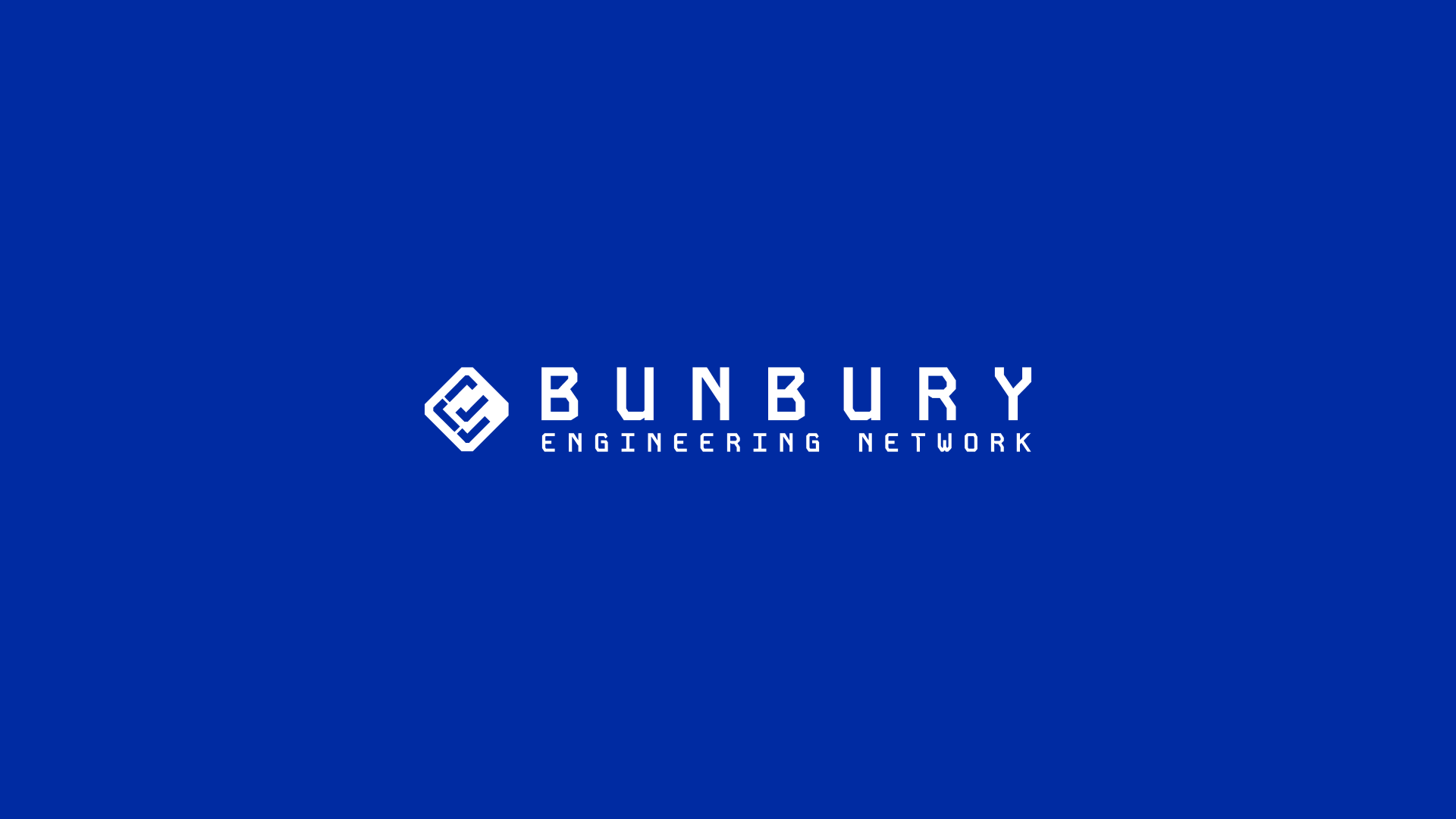
The final logomark is described simply as "ticking the boxes." Inside a beveled diamond, a checkbox is formed through an interlocking set of ticks. The checkbox is the container. The ticks create it. They're the same element doing two jobs simultaneously, which is exactly what good logomark design is supposed to do.
The beveled diamond separates the mark from the rounded softness of a consumer brand without tipping into the aggressive angularity of something that feels cold or unapproachable. It reads as industrial but not intimidating. Heavy but not slow.
The tick within the checkbox does the conceptual work. It references ISO accreditation directly for anyone in the industry who reads that language. For everyone else, it communicates completion, correctness, verification. The mark says: this organisation checks its work.
The wordmark is set in a technical, monospaced typeface with deliberate notching in the letterforms that reinforces the engineering context without resorting to clichés. BUNBURY in large bold caps. ENGINEERING NETWORK in spaced capitals beneath. The hierarchy is clear: the place first, the function second.
The System
The logo system was built for real-world flexibility. A full horizontal lockup for signage and headers. A stacked version with the mark alongside BUNBURY and ENGINEERING NETWORK beneath for square formats and smaller applications. A mark-only version for contexts where the name doesn't need to be there.
The primary colour is a sharp cyan blue, clean and technical, distinct from the navy blues that dominate the competitor landscape. On dark backgrounds the mark inverts cleanly. On the brand colour it holds its own without needing an outline to survive.
The mark at scale, blown up to fill a square frame, holds its detail and its confidence. That's the test. A logomark that only works at business card size isn't a logomark, it's a decoration.
What the Brand Holds
Bunbury Engineering Network works in a sector where trust is earned through demonstrated competence, not marketing. The brand had to reflect that. It couldn't be slick. It couldn't feel like it was trying too hard to look modern. It needed to feel like it came from somewhere real, and that the people behind it had genuinely earned the right to carry the ticks.
The mark does that. It takes the organisation's own pride in its accreditation and makes it the structural idea of the identity. The tick isn't borrowed from somewhere else. It's theirs.
Bunbury Engineering Network, Brand Identity